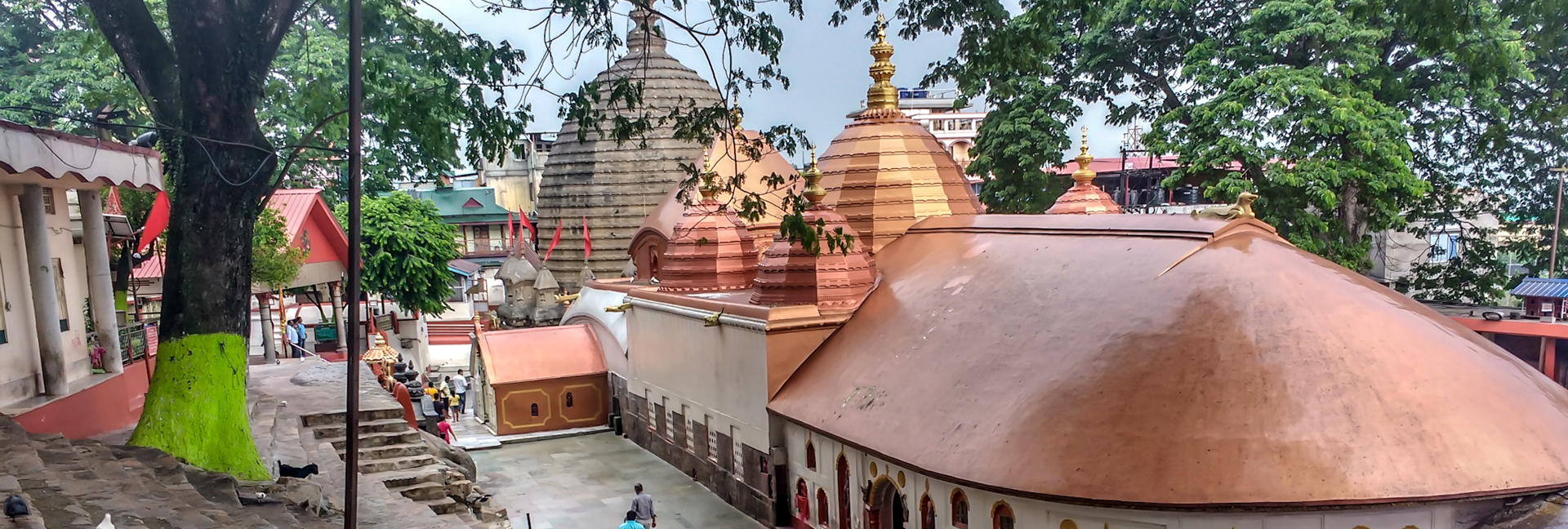
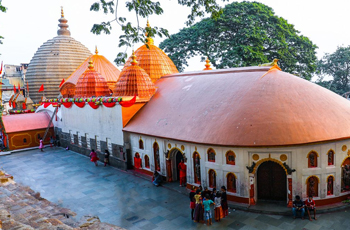
Arrive Guwahati by Flight. Upon arrival at Guwahati airport, you will be met by our airport representative. Then you will be taken to your hotel. If time allow, we shall visit the most important Hindu pilgrim site – Kamakhya Temple – a majestic temple of the state. This temple is located in the Nilachal hills and one of the oldest of the 51 Shakti Pithas. Later go for sunset river cruise on the mighty Brahmaputra River (river cruise is subjected to river conditions and availability). Overnight at Hotel

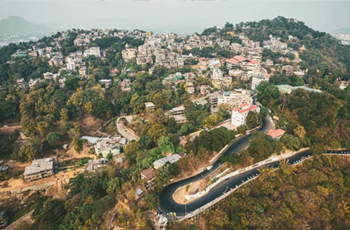
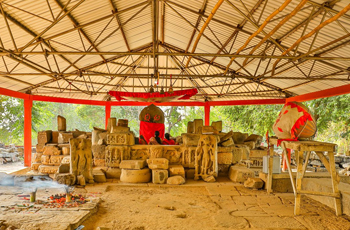
This morning we shall head towards Tezpur (220 Kms / 4 Hrs)– lying on the northeast bank of the Brahmaputra River is a small places slouches of lush green tea gardens and the endless paddy fields. Enroute we shall visit the charming weaver home at Sualkcuhi which was established around 17th century the great Ahom administrator Momai Tamuli Barbura. Next we shall take short tour to visit is to the ruins of the Madan Kamdev temple complex, whose erotic iconography is given the nick name ‘Khajuraho of Assam’. It is located on the Dewangiri hillock is steeped in an erotic carpet of sculpted stones. Overnight at Hotel
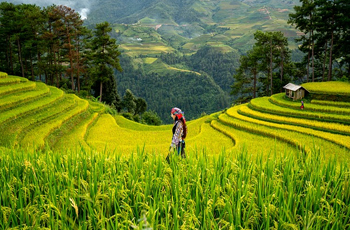

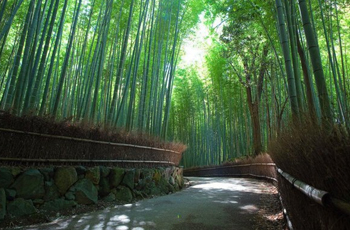
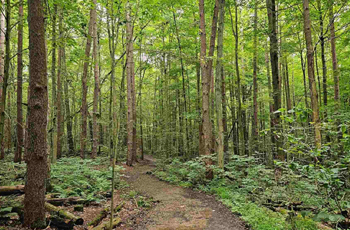
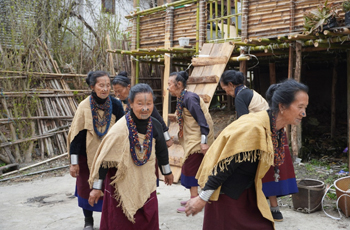
Get set for a drive Ziro (270 Kms / 5 Hrs), known as the Sequestered Paradise of the state locate at 1500 meters. Ziro has hills that are beautifully covered with bamboo and pine trees, surrounded with paddy fields. The town is home to a very friendly tribal group known as the Apatani tribe. A unique fact about the Apatani tribe is that, women of this tribe used to practice a custom of getting facial tattoos!Enroute explore a village inhabited by the Apatani Tribe. Overnight at Hotel
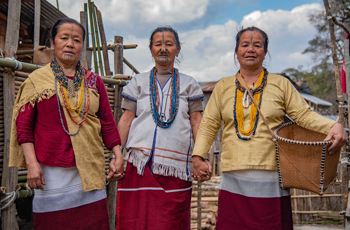
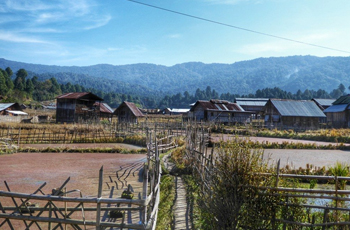
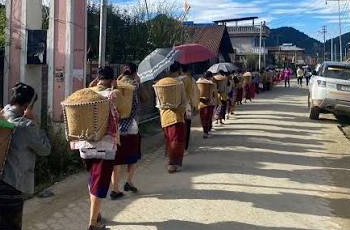
To know more about the inhabitants we shall spend the day visiting Apatani villages as Hong, Dutta & Hari to know their culture and life style. Overnight at Hote
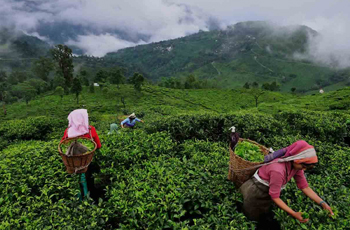
Board your waiting vehicles and head towards the historic and tea capital – Dibrugarh (280 Kms / 5 Hrs). The place is also gained a name in the history of becoming the air force station for the US Army during the 2nd World war. Check into hotel. Evening take a stroll in the nearby tea garden. Overnight at Hotel
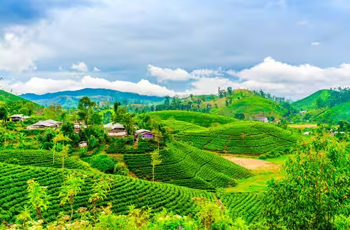

Today we will drive to our tribal destination of Nagaland – Mon (170 Kms / 4 Hrs) near the Indo-Myanmar border. The district of Mon is home to the Konyak Nagas who are by far the largest in numbers of all the different Nagas and also the most re-cognizable. The tattooed Konyak, all over their face and hands this tribe is famous for their muzzle loading guns. Overnight at Hotel
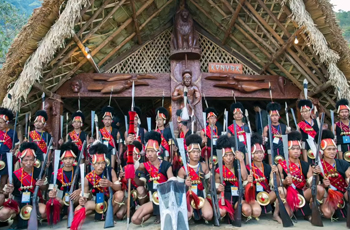
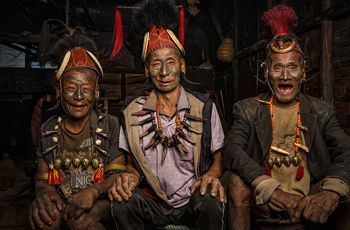
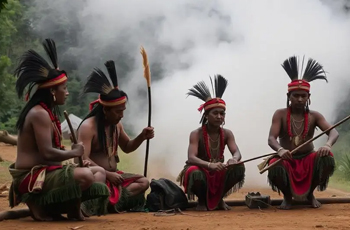
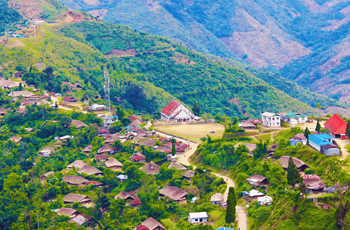
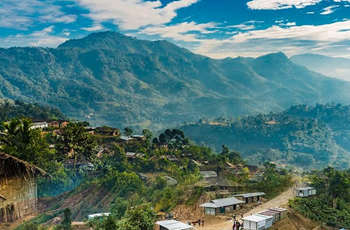
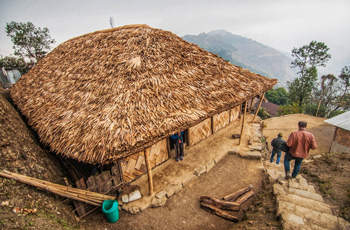
Longwah village in Mon district is one of the best places to see the unique diversity of Naga people. Located on the border of India and Myanmar (not to worry you don’t need a Myanmar VISA to visit this village), Here we shall visit some of the village inhabited by the Konyak tribe. Most interesting part to see in this village is to see the Village Chief’s house located on the border line of Indo – Myanmar and passes though his house dividing into two halves. Later visit Chui village, the architectural style of the Konyak houses, their roofs thatched with palm leaves and walls adorned with animal horns, presents a raw, earthy aesthetic. Overnight at Hotel
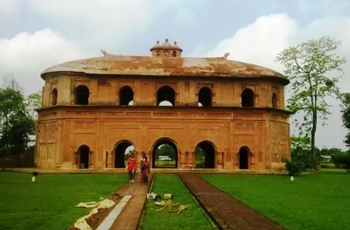
This morning head Jorhat (170 Kms / 4 Hrs), known as the tea treasure house. Jorhat refers to as Jor’ means join and ‘hat’ means market. The town is also very well known to have the oldest golf course in Jorhat is the oldest in Asia and the third oldest in the world. Watching tea growing in such vast expanse is a treat to the eyes. Enroute we shall visit Sibasagar – the ancient Ahom kingdom capital. If time permits visit Shiva Dol built by the Ahoms, situated here is believed to be the tallest of all existing Hindu temples. Followed by visit to Rang Ghar - largest and the oldest amphitheatre of Asia is also another remarkable landmark in the history of Sivasagar. Overnight at Hotel
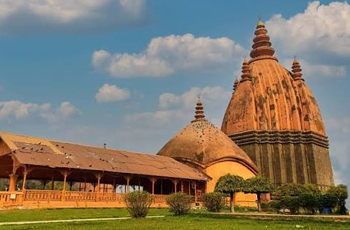

Cross the Brahmaputra River to reach the Majuli (35 Kms / 1 Hr + 1 Hour by Ferry) – assumed to the largest river Island in world, which also stands to the cultural capital of Assam ever since 16th century. Majuli is located on the river Brahmaputra in Assam and is formed by Brahmaputra in the south and the Kherkutia Xuti joined by the river Subansiri in the north. Making you feel at peace with nature, it is home to many migratory birds. Located 1100 km away from the mouth of the Brahmaputra, Majuli had an area of 1256 sq km in 1991 but due to soil erosion, it has now reduced to 875 sq km. Majuli has been the cultural capital of the Assamese civilization since the 16th century and its main village, Naghmar, hosts all the important events, festivals and prayers. Explore the island by visiting the Anuati sattras (monasteries) & Uttar – Kamalabari sattras (monasteries). Interact with the monks and visit monk’s quarter. Overnight at Hotel
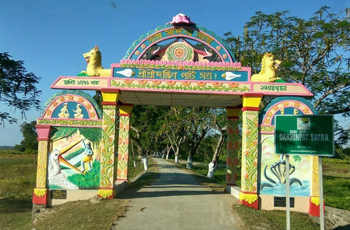
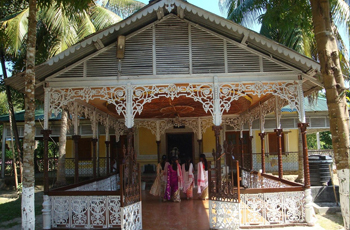
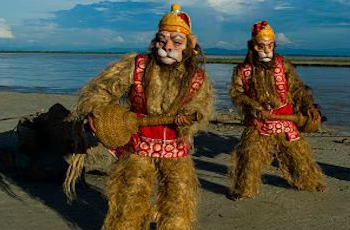
Set to the capital of Nagaland – Kohima (220 Kms / 4 Hrs), the land of the Angami Naga tribe located with an average elevation of 1261 meters. The name, Kohima, was officially given by the British as they could not pronounce the Angami name Kewhima or Kewhira (Tenyidie for "the land where the flower Kewhi grows"). The town of Kohima is located on the top of a high ridge and the town serpentines along the top of the mountain ranges as is typical of most Naga settlements.On arrival to Kohima, check into your room. Overnight at Hotel
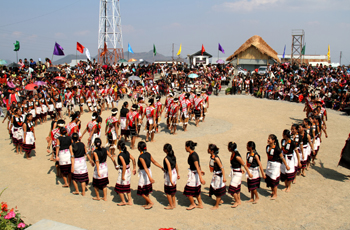
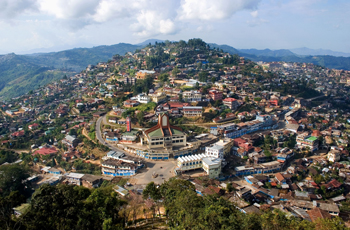
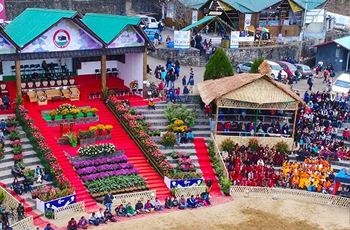
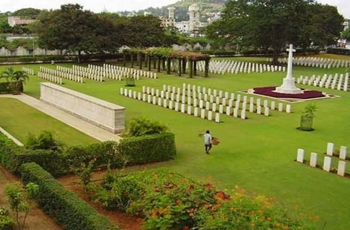
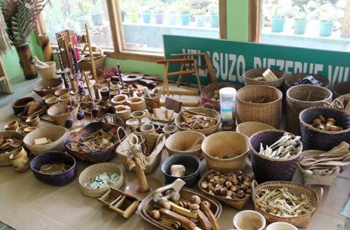
Visit the Kigwema an Angami hilly village – which once undergone the attack of the Japanese troupe on 4-4-44, exactly at 3-30 pm. This village was attacked by the Japanese military. The simplicity stone memorial constructed exactly at the beginning of the village area is something that goes along with this brutality. We shall go for an excursion to Khonoma – the green village. Khonoma is an Angami-tribe warrior village that is known for its battles with the English and for its leading role in the Naga freedom struggle. Later visit the World War Cemetery – constructed in memory of the officers and men who made supreme sacrifices during World War II. On each grave there are beautiful epitaphs engraved in bronze. The famous inscription written on the War Memorial stone reads "WHEN YOU GO HOME TELL THEM OF US AND SAY, FOR YOUR TOMORROW WE GAVE OUR TODAY". Also visit the Kohima State Museum - a platform that exhibits the vibrant culture of Nagaland through a collection of fascinating arts and artifacts. (Close on Mondays or on state/central Govt. holidays or for any other reason without any prior notice). Overnight at Hotel.
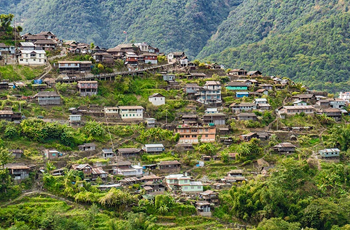
After breakfast check out from hotel and transfer to Dimapur airport (70 Kms / 2 Hrs) to board flight for your onward journey.
